Editorial placements
Built as editorial stories, not forced mentions.

Built for Reputation Work
Reputation campaigns work when each placement has a real editorial angle and the subject appears as a relevant example, not a forced mention. That gives search and AI systems stronger third-party context around the name.
Build relevant third-party articles around the pages, profiles and resources you want searchers to find.
Increase the amount of positive and neutral material surrounding a branded search.
Support searches where people add extra words alongside the name or brand.
Reinforce the right identity, background and associations across multiple relevant websites.
Brief to Delivery
Improve what people find when they search for a company, brand or person. We create credible editorial coverage that strengthens the pages you want people to find.
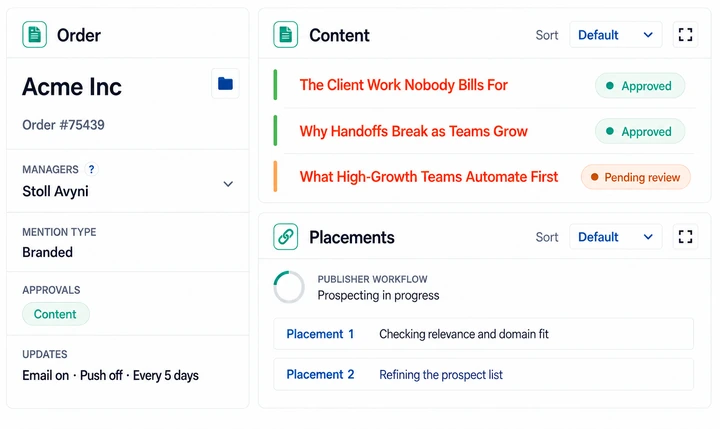
Use a third-person Editorial story or Informational guide to feature the subject and strengthen your chosen page.
Build credible coverage around an executive while strengthening the profiles and authoritative pages people should find when they search for that name.
Choose Generate Quotes or Custom Quotes for branded articles; add Custom Images and Citation URLs to Editorials. Context Terms guide relevant language.
How It Works shows the guided setup, content production, Revision Desk review and managed delivery flow in more detail.
Purpose-Built Features
The recommended setup keeps reputation work focused on credible editorial coverage, the right supporting pages and the level of review you need.
Use researched editorial articles that place the subject inside a wider story, not a forced mention.
Use one focused section, or give the subject several sections when the story needs the depth of a mini case study.
Support additional pages, profiles and resources with Citation URLs in branded Editorials.
Position sensitive search language inside benign, relevant contexts with supporting nearby terms.
Add content or placement approval steps where the topic, publisher or client process needs extra control.
Run high-priority reputation work quickly, use standard delivery, or spread placements over a drip-feed schedule.
Editorial Planning
We use the brief, owned assets and relevant topics to make the subject support an editorial article rather than overwhelm it.
Editorial is the recommended starting point for Reputation Management. Rank Engine builds useful articles around the subject, with Informational coverage when explaining the subject's work serves the reader better.
Read the Editorial MethodOne clear section can introduce the person or brand and explain why they matter to the wider story.
Several sections can explore the subject, their work and supporting results when more context is useful.
The finished piece remains informative and credible rather than reading like a profile or advertorial.
Case Study
The metrics below come from the corresponding reputation recovery case study, where editorial placements were used to reinforce stronger assets across a tracked branded search landscape.
With search results for an individual's name impacted by negative press, Rank Engine used a one-month reputation recovery campaign to build stronger editorial assets around the SERP.
Read case studyEditorial placements in one accelerated ORM campaign.
Average domain authority across campaign placements.
Links supporting client-owned assets and profiles.
Pages ranking across the tracked branded search landscape.
Negative results left on page one after 30 days, down from six.
Start Reputation Work
Rank Engine builds the editorial coverage that strengthens the assets you want found first, managed from brief to live URL.