Case Study

Online Reputation Recovery

Negative press dominated the client's search results. One month of editorial placements pushed it off page one and restored positive brand coverage.

Campaign Snapshot

Personal Brand Reputation Management

Campaign context

  • PR agency client - an individual represented by a PR agency seeking to suppress negative press.
  • Aggressive schedule - eight weekly placements for one month.
  • Strategic anchoring - each article linked to multiple personal profiles using the individual's name and related anchor texts.
Months 1

Accelerated suppression sprint.

Placements 32

Editorial placements published across four weekly orders.

Avg. Link DA 57.2

Average Moz Domain Authority across placements.

Backlinks 68

Links supporting profiles, owned assets and editorials.

Pages Ranked 25

Assets ranking across the tracked branded SERP landscape.

Success Rate 93%

Recorded success rate for the one-month campaign.

Client Profile

An individual dealing with negative press.

The subject was represented by a PR agency and faced negative press stemming from a court-case accusation, of which they were ultimately acquitted. Search results for their name were tainted by this controversy, and they had not previously run targeted reputation or content placement work to suppress unfavourable content.

Objective

Push damaging results out of first view.

The campaign needed to push negative court-case coverage off page one and out of the first 20 organic results, while populating branded search with stronger positive assets, profiles and editorials.

Strategy

Publish quickly, link deliberately.

Rank Engine ran weekly orders across one month, each publishing eight editorial placements on reputable blogs. Placements linked to social profiles and owned assets, using the individual's name as a primary anchor plus additional context-related anchors across multiple URLs.

Research Foundation

Evidence behind the campaign.

Online Reputation as an Economic Asset

Uri Samet, 2024

A meta-analysis of studies from 2000-2025 found that digital perception has measurable economic value, influencing sales, brand equity, organisational trust and market confidence.

SERP Correlation Study

Ahrefs, 2025

Ahrefs analysed one million US keyword SERPs and found referring-domain count still correlates with rankings, with a reported Spearman rho of about 0.255.

Backlinks' Monthly Gain vs. Ranking

Search Engine Land, 2025

Search Engine Land reported that top-ranked pages acquire 5-14% more followed backlinks per month than lower-ranked pages, supporting sustained acquisition velocity.

Project Builder Setup

Turn campaign direction into a clear brief.

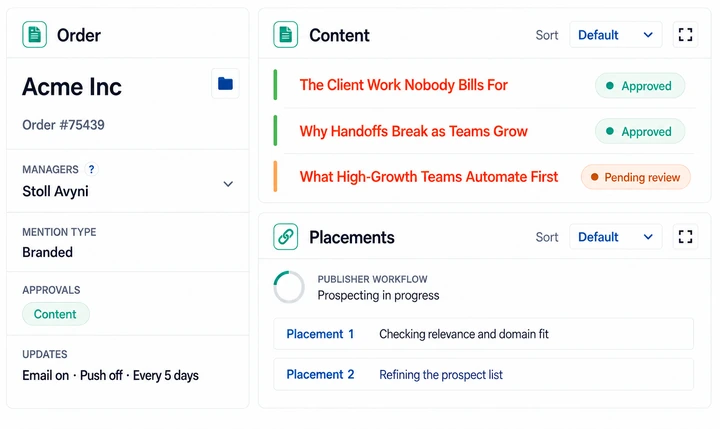
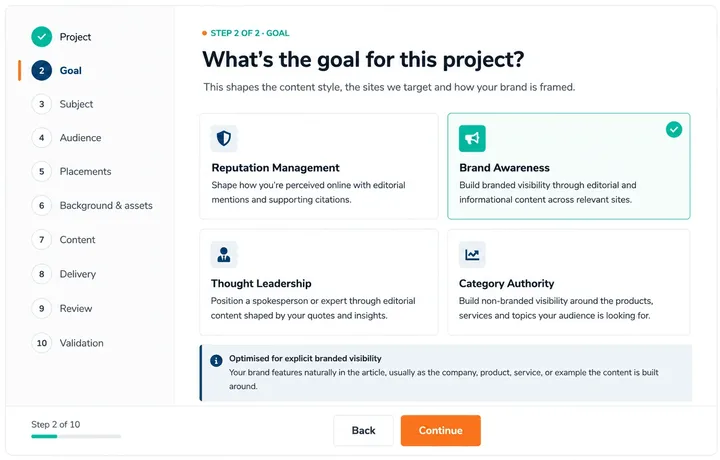
Rank Engine used the Project Builder to turn weekly campaign planning into a focused setup. Audience filters, URL targeting and Smart Select criteria gave the same blueprint to research, site selection and production.

Mention Type

Branded

The personal brand was integrated as a real-world example within quality editorials.

Delivery time

One-week turnaround

A fast delivery window limited reputational damage and kept new assets moving into the SERP quickly.

Regional focus

Primary market context

News, facts, statistics and references were focused around the client's area of operations.

Citation URLs

Multiple supported assets

Each article could include the target URL plus up to two additional URLs, supporting profiles and owned properties together.

Backlink targeting

Smart Select™

Relevance, traffic and authority were balanced so site selection served the reputation objective rather than a DA number alone.

Approvals

Managed by default

Approval steps were available, but leaving them off supported the fastest fully managed publishing path.

Content Production

Build articles that can carry the campaign.

The campaign needed editorial placements that were credible, timely and context-rich, not thin articles built only around a link.

Topic refinement

Submitted topics were expanded with research, industry news and expert commentary.

Autonomous ideation

Where topics were not supplied, Rank Engine surfaced relevant angles from the client brief and current sources.

Content drafting

Each draft integrated data points, examples, expert quotes and the client's legitimate supporting details.

Link and media enrichment

Contextual backlinks, relevant imagery and external citations made each article richer and more credible.

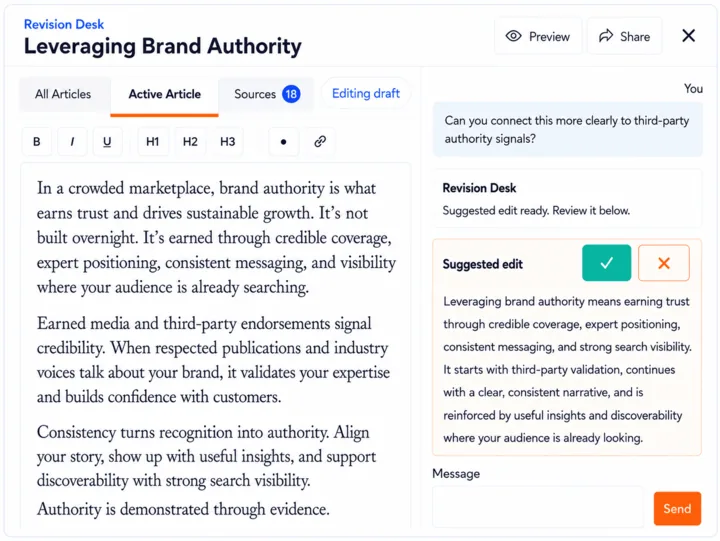
Editorial QA

The team verified facts, polished tone and kept the mentions natural rather than promotional.

Editorial Strategy

The editorial strategy behind the campaign.

The campaign needed more than positive mentions. Each article angle had to give publishers a credible reason to cover the subject while building stronger search results around the name.

01

Professional credibility

Rebuild the first impression

Articles connected the subject to role-relevant themes, experience and practical context so branded searches surfaced credible professional signals first.

02

Industry contribution

Show why the subject belongs

Campaign angles used market context, commentary and sector-specific topics to make the person part of a wider industry discussion.

03

Neutral context

Handle sensitive searches carefully

Sensitive modifier terms were placed inside benign, neutral editorial contexts without repeating or validating the original negative narrative.

04

Profile support

Strengthen positive assets

Articles linked naturally to owned profiles and supporting pages, helping those assets compete for the branded SERP instead of relying on one destination.

Content strategy

Make each placement support the outcome.

The campaign was designed to compete beyond the basic name query and shape how related searches interpreted the subject, including searches where users add sensitive modifiers to the name.

Reframe negative searches

Context terms placed sensitive search language inside benign, relevant articles, supporting searches where users added modifiers to the name.

Win on freshness

Recent, timely articles helped compete with fresh negative press by giving Google newer sources with clearer dates and context.

Steer the angle

Article topics and exclusions kept adjacent themes credible, such as governance, compliance, risk management or industry regulation.

Keep the narrative consistent

Background and assets established a stable entity anchor: role, niche and supporting details repeated across placements.

Ground it locally

Regional Focus tied examples, reference brands, studies, events and regulatory context to the client's region.

Weekly process

Managed from research to publication.

01

Research & content

AI agents researched industry sources and expert commentary, then drafts were proofread for facts, tone and message fit.

02

Prospecting

Smart Select scored sites for relevance, traffic, backlink health, authority and other ranking factors.

03

Approvals

Content and placement approvals were available when oversight was required.

04

Outreach

Each article was pitched as an insight-driven piece with a fast delivery window.

05

Publication

Accepted articles published on approved, reputable sites with natural mentions and targeted anchor text.

Results

The outcome in measurable terms.

Pages refer to Google organic results pages for the tracked name query. Assets are positive listings created or strengthened during the campaign. Neutral listings were not damaging, but were not assets created or strengthened by the campaign.

Results Page Baseline Month 1 Change
1 Assets2/9Neutral1/9Negative6/9 Assets8/9Neutral1/9Negative0/9 Assets+6Neutral0Negative-6
2 Assets4/10Neutral6/10Negative0/10 Assets9/10Neutral1/10Negative0/10 Assets+5Neutral-5Negative0
3 Assets4/10Neutral6/10Negative0/10 Assets8/10Neutral0/10Negative2/10 Assets+4Neutral-6Negative+2

Within 30 days, page one shifted from 2/9 assets and 6/9 negative results to 8/9 assets and 0/9 negative results. Page two increased from 4/10 to 9/10 assets. Remaining negative results were pushed beyond the first 20 organic results and appeared only on page three.

Key Takeaways

What the campaign proves.

First impressions define trust

Removing negative listings from page one meant searches for the individual's name surfaced neutral and positive material first.

Every search becomes an asset

Assets occupied 25 of the first 29 organic results, with no negative results in the first 20 organic listings.

Durable brand protection

A cohesive network of interlinked profiles and quality content created stronger signals around the name.

Start a Campaign

Shape the search narrative with credible placements.

Set the direction and Rank Engine manages the research, content, outreach, publishing and reporting needed to strengthen branded search results.